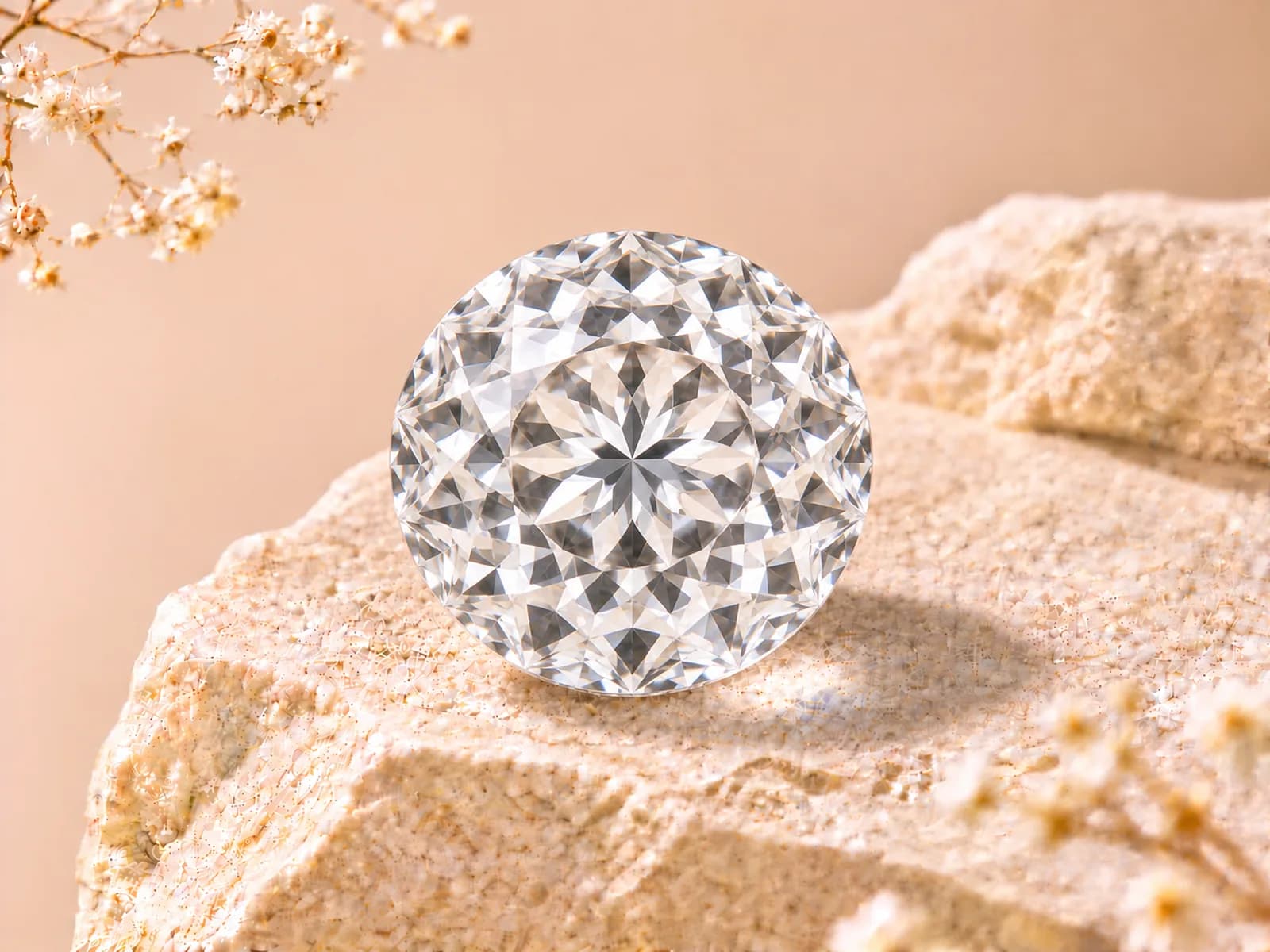
Mineral species
Every stone is filed under its mineral species first, then its colour variety. Lab-Grown Diamond is a variety of Carbon (laboratory-grown diamond) — the colour is what makes it this stone rather than a sibling.
- Species
- Carbon (laboratory-grown diamond)
- Formula
- C
- What makes this variety
- Identical crystal structure to mined diamond; grown from a carbon plasma rather than formed in the mantle
Same species, different variety
These are the same mineral. Whether one can substitute for another is an astrological question, not a gemological one — the planetary association is what decides that.
Scientific & gemological profile
- Mineral family
- Carbon (C) — identical crystal structure to mined diamond
- Hardness
- 10 Mohs
- Refractive index
- 2.417
- Dispersion
- 0.044 — the same fire as mined diamond
- Growth methods
- CVD (chemical vapour deposition) or HPHT (high-pressure, high-temperature)
- Buying standard
- Certified by IGI or GIA, with the growth method stated on the report
The astro-energetic bridge
A lab-grown diamond is chemically, optically and structurally a diamond — the same carbon lattice, the same 10 Mohs hardness, the same 2.417 refractive index that splits white light into full-spectrum brilliance. In Vedic tradition the stone's identity is Heera, the gem of Shukra (Venus), and that identity is unchanged by how the crystal formed. What changes is provenance: the tradition speaks of stones drawn from the earth, and a laboratory-grown stone is not that. Modern Jyotish practitioners increasingly accept high-clarity, un-irradiated CVD diamonds for Venusian lifestyle alignment, aesthetic magnetism, Numerology 6 amplification and Vastu South-East activation — while traditionalists still prefer earth-mined stones for deep remedial work. Gemkatha states the origin plainly on every listing so the choice is yours, made with full information rather than a sales claim.
Associations
Ruling planet
Rashi (zodiac)
Life goals
Numerology
Associated with Number 6.
Vastu zone
South-East (Agneya)
Wearing ritual (Vidhi)
- Ideal weight
- 0.50 to 2.00 carats is the usual range for a ring stone
- Metal & setting
- Platinum, white gold or silver in an open-back setting — never copper
- Finger
- Middle finger (Madhyama) or ring finger (Anamika), right hand
- Day & time
- Friday morning, Shukla Paksha
- Beej mantra
- Om Dram Dreem Droum Sah Shukraya Namah (108 times)
Traditional guidance only. Wearing practice varies by region and by family custom, and is not a condition of purchase.
Astrological associations described here reflect traditional Jyotish guidance. They are not medical or financial advice, and we make no claim that a gemstone will produce a specific outcome.